Guide to Chimpanzee Trekking in Uganda 2027
September 3, 2026
How to Plan the Perfect Murchison Falls Safari in Uganda
September 3, 2026
How Much Does a Walking Safari in Uganda Cost? A walking safari offers something a vehicle-based game drive can’t: the sound of the bush at ground level, tracks and dung read directly by your guide, and a considerably more intimate scale of encounter with the animals you’re there to see.
Cost varies meaningfully by location and duration, and understanding what drives that variation helps you budget accurately rather than guessing at a single flat number.
This guide breaks down realistic walking safari pricing across Uganda’s main destinations and what shapes the cost from one park to another.
The General Price Range
A half-day guided walk typically starts around $30 to $50 per person, while full-day walks or multi-day walking safaris run $70 to $150 or more, depending on the exclusivity of the experience and exactly what’s included. This range reflects variation in guiding quality, group size, and the specific park’s fee structure rather than an arbitrary spread.
Location Changes the Price
Walking safaris in more accessible parks like Lake Mburo or Murchison Falls generally cost less than specialized treks in more remote or physically demanding areas such as Kidepo Valley or Bwindi Impenetrable Forest. Lake Mburo in particular stands out as Uganda’s most walking-friendly park, given its comparatively lower density of dangerous predators, and walking safaris there tend to sit toward the lower end of the overall price range as a result.
What’s Actually Included in the Price
A standard walking safari fee covers park entry (where not already covered by a separate daily entrance fee), a licensed ranger guide, and, in areas with predator risk, an armed ranger escort. Confirming exactly what’s bundled into your quoted price, particularly whether standard park entrance fees are included or charged separately, matters before comparing quotes from different operators.
Standalone vs. Combined With Other Activities
Many visitors don’t book a walking safari as a standalone activity, instead combining it with gorilla trekking, chimpanzee tracking, or a broader multi-day itinerary. This changes the overall cost picture: a walking safari at Lake Mburo followed by a transfer to Bwindi for gorilla trekking adds the $800 gorilla permit on top of the walking safari’s modest cost, meaning the walking component itself remains a small share of the total trip budget in a combined itinerary.
Park Entrance Fees, Charged Separately
Beyond the walking safari activity fee itself, most parks charge a separate daily entrance fee: $45 for foreign non-residents at Murchison Falls, and $40 at Queen Elizabeth, Kibale, Lake Mburo, and Kidepo, with slightly lower rates at Rwenzori, Semuliki, and Mount Elgon. These entrance fees apply regardless of which specific activity you’re doing that day, walking safari or otherwise, and should be added to your walking safari cost when calculating your total for the day.
Group Size and Private vs. Shared Walks
Joining a shared, scheduled walking safari with other travelers reduces per-person cost compared with booking a fully private walk exclusively for your own party, similar to how shared versus private vehicle costs work for standard game drives. Travelers prioritizing cost over exclusivity should specifically ask their operator about joining scheduled group walks rather than defaulting to a private booking.
Multi-Day Walking Safaris
For travelers wanting an immersive, walking-focused experience rather than a single activity within a broader itinerary, multi-day walking safaris exist at select destinations, combining overnight fly-camps or mobile tented setups with consecutive days of on-foot exploration. These naturally run toward the higher end of the price range given the additional camping logistics, specialized guiding, and porter support involved.
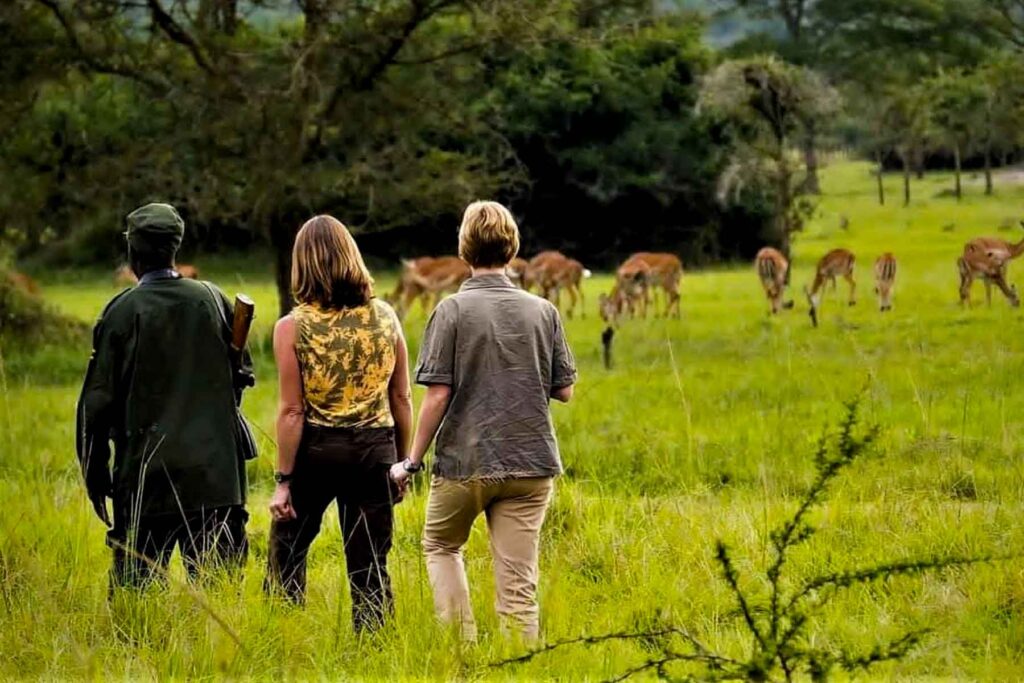
Walking Safari
Why Hiring a Skilled Guide Matters for the Price
A experienced walking safari guide, one who reads tracks, understands animal behaviour, and knows how to maintain safe distance from potentially dangerous wildlife, is worth paying a premium for over a cheaper, less experienced alternative. Given that walking safaris place you considerably closer to wildlife than a vehicle does, this is one area of Uganda safari planning where cutting costs on guiding quality isn’t advisable.
Quick-Reference Cost Guide
| Type | Typical Cost | Notes |
| Half-day guided walk | $30-50 per person | Excludes standard park entrance fee |
| Full-day walk | $70-150+ per person | Varies by exclusivity and park |
| Multi-day walking safari | Higher, varies by camp setup | Includes camping/porter logistics |
| Park entrance fee (separate) | $35-45 per day | Varies by park category |
Building Walking Safaris Into a Budget Itinerary
For cost-conscious travelers, joining scheduled group walks rather than private ones, choosing parks like Lake Mburo where walking safaris run cheaper, and combining the activity with other planned park visits rather than booking it as a standalone add-on all help keep the overall walking safari cost contained within a broader Uganda trip budget.
What Makes a Walking Safari Worth the Price
Beyond the practical cost breakdown, a walking safari delivers something different from a vehicle-based drive: the ability to examine tracks, dung, and vegetation damage up close, learn directly from your guide how to read these signs yourself, and experience the bush at a pace that allows reflection rather than constant movement toward the next sighting. For many travelers, this qualitative difference alone justifies the modest additional cost over simply adding another standard game drive to their itinerary.
Safety Considerations That Justify the Cost
Part of what you’re paying for with a walking safari is safety infrastructure: armed ranger escorts in areas with dangerous wildlife, careful route planning that avoids known predator territory during vulnerable hours, and a guide trained specifically in reading animal behaviour and maintaining safe distance on foot. This safety layer is precisely why walking safaris cost more than simply wandering independently would, and why cutting costs on guide quality specifically isn’t advisable for this particular activity.
Frequently Asked Questions
How much does a half-day walking safari cost in Uganda?
Typically $30 to $50 per person, though this generally excludes the separate daily park entrance fee, which should be added to calculate your total cost.
Which park offers the cheapest walking safaris?
Lake Mburo generally sits toward the lower end of the price range, given its comparatively lower density of dangerous predators and more accessible terrain.
Does the walking safari fee include park entrance?
Not always. Confirm with your operator whether the standard daily park entrance fee, $35-45 depending on the park, is bundled into your quoted walking safari price or charged separately.
Is it cheaper to join a group walking safari than book privately?
Yes, generally. Joining a scheduled group walk shares the guide and logistics cost across more people, similar to how shared versus private game drive vehicles work.
Can I combine a walking safari with gorilla trekking in the same trip?
Yes, and many itineraries do exactly this, for instance a Lake Mburo walking safari followed by a transfer to Bwindi, though this adds the separate $800 gorilla permit fee to your overall trip cost.