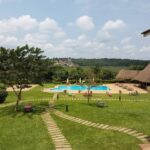
Red Chilli Rest Camp
July 14, 2026
Best Areas for Wildlife Watching in Murchison Falls National Park
September 3, 2026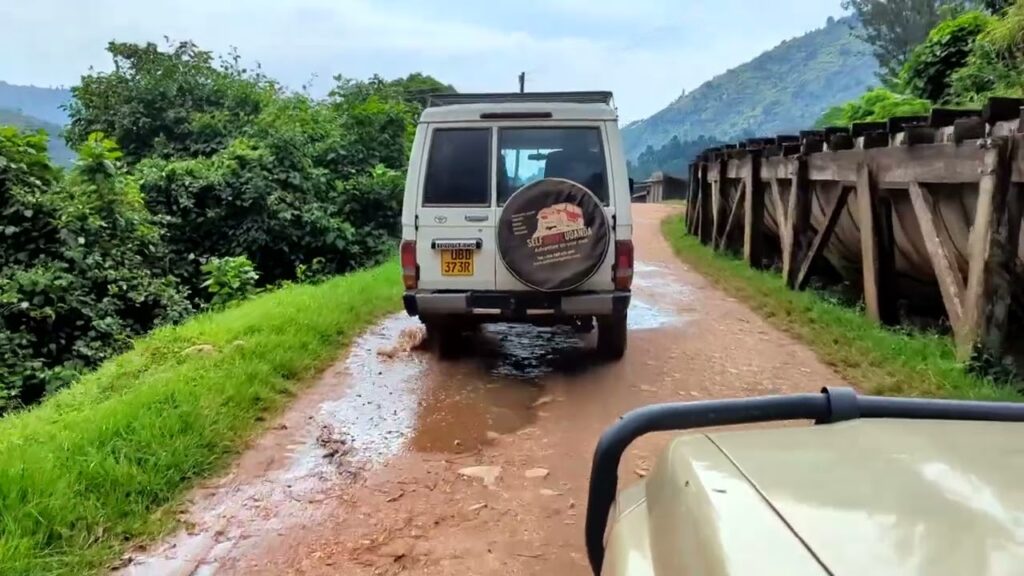
Self-Drive Safari In Murchison Falls National Park
A self-drive safari in Murchison Falls National Park is entirely achievable, considerably cheaper than a guided private safari, and increasingly popular among travelers comfortable with East African road conditions and a bit of independent navigation.
This guide covers everything genuinely needed to plan and execute a successful self-drive safari at Murchison Falls: the vehicle you need, how to get there, navigating inside the park, the costs involved, and the practical details that make the difference between a smooth trip and a frustrating one.
Is Self-Driving Murchison Falls Actually Feasible
Yes, and more straightforwardly than many first-time visitors assume. Murchison Falls National Park does not require a mandatory guide for game drives, a notable difference from gorilla trekking elsewhere in Uganda, which absolutely does require a ranger guide.
Travelers who have completed the self-drive can confirm that the park’s main tracks are well maintained and well signed, and that wildlife at Murchison is genuinely easy to spot, given how well-traveled the park’s tracks are, with little need for specialist local knowledge to find the main attractions.
That said, self-driving is a genuine commitment rather than a casual decision. It requires comfort with East African road conditions, basic vehicle navigation using GPS or offline mapping apps, and a willingness to handle the practical logistics, including the timed ferry crossing, entirely on your own initiative.
Choosing the Right Vehicle
For the main tarmac approach roads from Kampala through Masindi, a standard vehicle can manage reasonably well. However, once inside the park boundaries, the tracks are predominantly murram, meaning gravel and compacted earth, and these can become genuinely slippery and challenging during the rainy season.
A proper 4×4 with good ground clearance is strongly recommended for navigating these tracks safely and for accessing the full range of the park’s game viewing circuits.
Popular rental options among self-drive travelers include the Toyota Land Cruiser Prado, Land Cruiser VX, or GX models, and the more compact Toyota RAV4 for travelers wanting something easier to maneuver. Rental companies based in Entebbe and Kampala typically quote rates around 80 to 150 US dollars per day for a 4×4 depending on the vehicle category and whether camping equipment, including rooftop tents, chairs, and cooking gear, is included in the package.
Some rental companies offer one-way rental systems, allowing collection in Uganda and drop-off elsewhere in East Africa, useful for travelers combining a Murchison self-drive with onward travel into Kenya or Rwanda on the same trip.
Getting to Murchison Falls
Two main southerly approaches lead from Masindi town, itself a four-hour, 305-kilometer drive from Kampala, into the heart of the Murchison Falls Conservation Area at Paraa. The shorter route runs through Kichumbanyobo Gate and Kaniyo Pabidi Forest, covering 85 kilometers to Paraa.
The longer but considerably more scenic alternative covers 135 kilometers from Masindi through Bugungu Gate, passing through Budongo Forest and including a genuinely memorable descent of the rift valley escarpment with views across Lake Albert toward the mountains of the Congo.
Along the road to Masindi, Ziwa Rhino Sanctuary makes an excellent and easily accessible stop, home to Uganda’s only wild rhino population and well worth building into a self-drive itinerary as a natural breaking point in the journey.
Navigating the Paraa Ferry Crossing
The Victoria Nile divides Murchison Falls into a northern and southern section, and a vehicle ferry at Paraa is required to cross between them. The ferry runs at roughly hourly intervals between approximately seven in the morning and seven in the evening, though self-drive travelers consistently report that arriving early matters enormously: the first ferry of the day typically has space for only around eight vehicles, and missing it means a genuine wait that eats into prime early-morning game viewing time.
Self-drive travelers should plan to arrive at the ferry crossing point well before its scheduled departure, ideally by six thirty for a seven o’clock crossing, to secure a vehicle space and make the most of the cooler, more wildlife-active early morning hours on the northern savanna.
The Best Self-Drive Game Tracks
The northern sector, accessed via the ferry, contains Murchison’s most productive game viewing circuits. The Buligi Peninsula track is consistently the standout option, offering sightings of Uganda kob, hartebeest, leopards, and elephants across genuinely beautiful open savannah terrain. The Victoria track and Queen’s track between them cover the remaining productive northern circuits, with the delta area, where the Victoria Nile meets Lake Albert, particularly rewarding for early morning visits when elephants, giraffes, and zebras come down to drink and lions are most likely to be actively hunting.
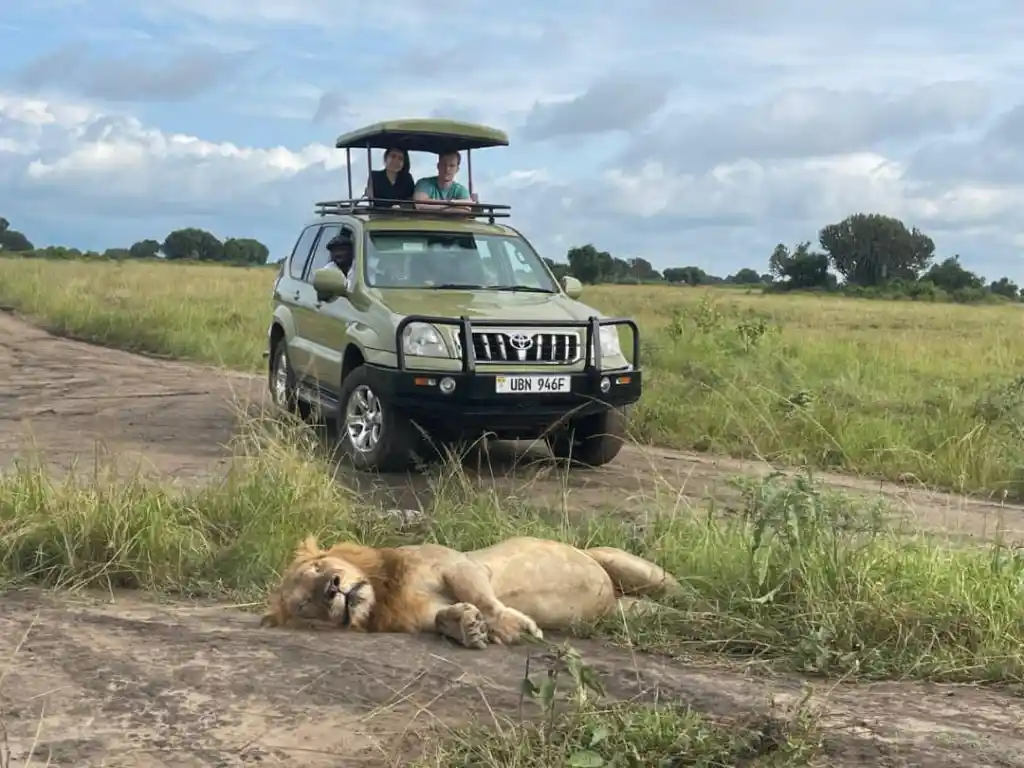
Game Drive
For travelers planning their route to maximize time rather than retracing tracks unnecessarily, a sensible north-to-south progression works well: entering from Pakwach East or via Tangi Gate, working through the delta area covering the Albert Nile, Queen’s, and Victoria Nile tracks, then continuing to Paraa for the boat cruise, crossing the ferry, and finishing with the hike to the top of the falls before exiting through Kichumbanyobo Gate toward Kampala or Masindi.
| Self-Drive Element | Detail | Practical Note |
| Vehicle requirement | A 4×4 is strongly recommended | Murram tracks slippery in rainy season |
| Self-drive activity fee | Approximately USD 10 per person | Separate from park entrance fee |
| Park entrance fee | USD 45 per adult non-resident | Valid 24 hours from entry |
| Vehicle entrance fee | Around USD 150 for foreign 4x4s | Plus park-specific surcharge |
| Ferry crossing | Roughly hourly, 7am to 7pm | Arrive 30 minutes early to secure space |
| Best tracks | Buligi, Victoria, Queen’s, Delta | Northern sector, accessed via ferry |
Activities Available on a Self-Drive Visit
A self-drive safari does not mean missing out on Murchison’s signature experiences. The Nile boat cruise to the base of the falls remains available and is typically booked directly at the Paraa jetty office or through your chosen accommodation, regardless of how you arrived at the park.
The same applies to the hike to the top of the falls and chimpanzee tracking in Budongo Forest, both of which can be added to a self-drive itinerary exactly as they would be for a guided traveler.
Self-drivers retain complete control over which activities to add and when, without needing to coordinate with a guide’s schedule or a group’s collective preferences, which is precisely the appeal that draws independent travelers to this format in the first place.
Where to Stay on a Self-Drive Murchison Trip
Self-drive travelers have access to the full range of Murchison accommodation, from camping at Red Chilli Rest Camp or the Uganda Wildlife Authority’s official campsites through to comfortable midrange lodges and the park’s flagship luxury properties. Many self-drive travelers specifically favor rooftop tent camping, increasingly popular precisely because of its flexibility, affordability, and the ease of simply parking and setting up rather than needing to coordinate arrival times with a fixed lodge booking.
Booking accommodation in advance remains sensible even for self-drive travelers, particularly during peak dry season months, since arriving without a reservation and hoping for available rooms or campsite space carries real risk during busier periods.
Safety Tips for Self-Driving
- Stick strictly to marked tracks and never drive off-road, both for safety and because it is against park regulations designed to protect the ecosystem
- Avoid night driving within the park, when wildlife is least predictable and visibility is genuinely limited
- Maintain a sensible speed, generally capped around 40 kilometres per hour on park tracks, both for wildlife safety and your own vehicle’s wellbeing on uneven surfaces
- Keep a safe distance from all wildlife, particularly elephants and buffalo, which can react unpredictably to a vehicle approaching too closely
- Carry a basic vehicle repair kit, a spare tyre in good condition, and emergency contact numbers for your rental company in case of mechanical issues in a remote section of the park