Camping In Murchison Falls National Park
July 9, 2026
Igwara Lodge
July 14, 2026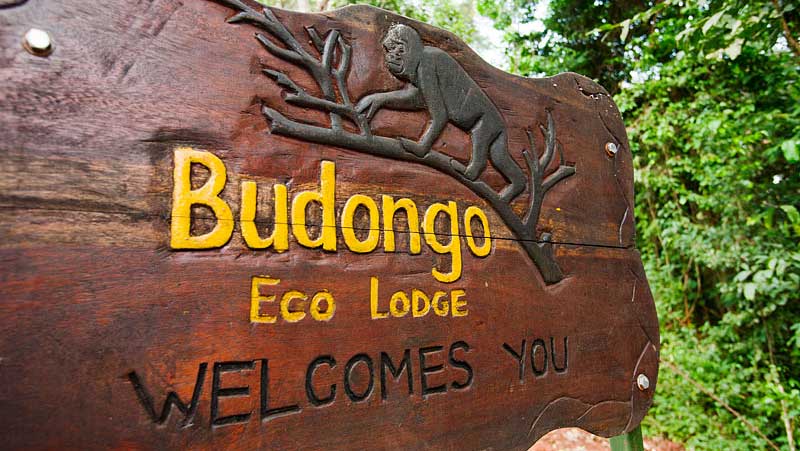
Budongo Eco Lodge
Budongo Eco Lodge is a genuine pioneer of accommodation in Murchison Falls National Park. Also known locally as the Kaniyo Pabidi Ecotourism site, this lodge sits directly in the heart of Budongo Forest Reserve, one of the largest and most beautiful rainforest locations in Uganda, and has spent years delivering excellent, genuinely affordable accommodation to travelers who came specifically for the forest rather than the river.
Originally managed by the Jane Goodall Institute before responsibility passed to Budongo Eco Lodge in 2009, the property carries a serious conservation pedigree that continues to shape how the lodge operates and how seriously it takes the forest surrounding it.
Location and the Forests Around It
Budongo Eco Lodge sits within Kaniyo Pabidi Forest, the northeastern extension of the much larger Budongo Forest Reserve, in the southern section of Murchison Falls National Park, roughly 220 kilometers from Kampala, a journey of four to five hours by road through the main Kichumbanyobo Gate. The forest itself covers a remarkable breadth of biodiversity within a relatively compact area: 9 different primate species, 360 recorded bird species, over 290 types of butterflies, and some of the oldest trees found anywhere in Uganda, all within genuinely easy access of the lodge.
Visitors approaching from Masindi town reach the lodge in approximately thirty minutes, while those continuing onward toward Murchison Falls proper can easily combine forest activities here with the classic Paraa side game drives and boat cruises that anchor most Murchison itineraries.
The road from Masindi to the lodge runs along the main Paraa road and is generally in good condition year round, making Budongo Eco Lodge one of the more reliably accessible budget properties in the wider park even during the rainier months, when some of the more remote camps elsewhere in Murchison face genuinely challenging road conditions.
Rooms and Accommodation
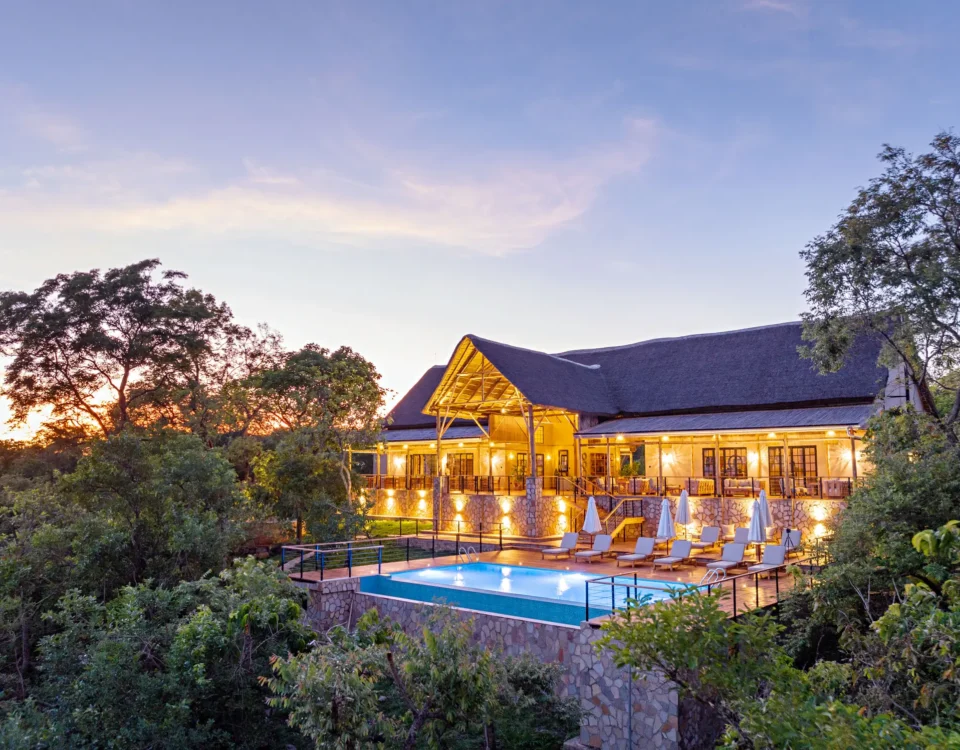
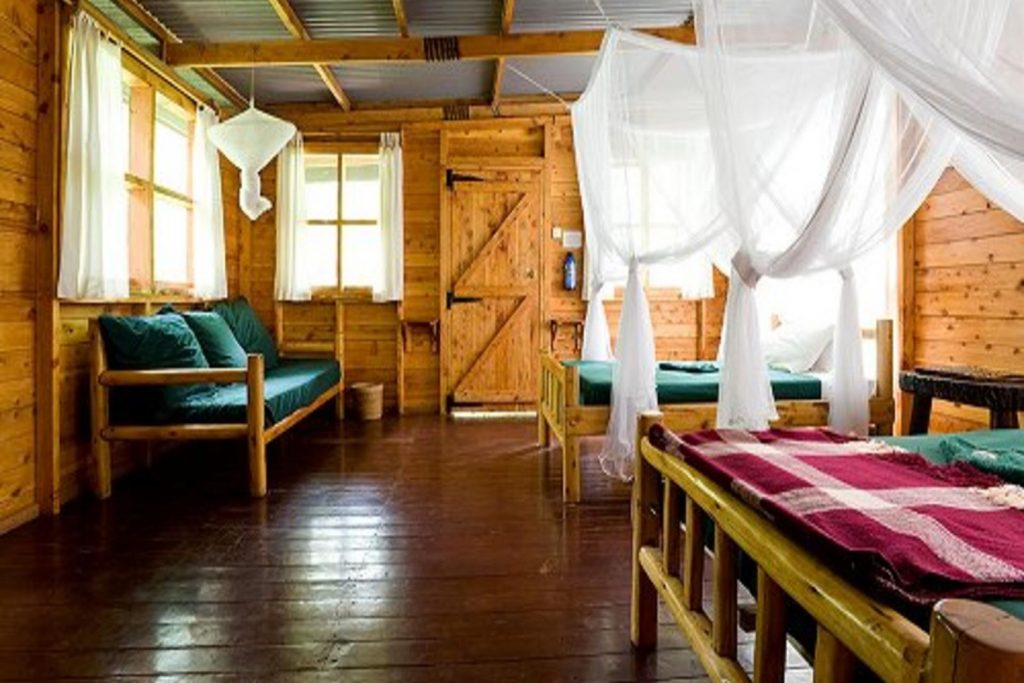
Budongo Eco Lodge offers six intimate, eco-friendly log cabins, each secluded within the forest for maximum privacy and fitted with either a double bed or a single king-size bed alongside a sitting area with a daybed. Every cabin is en suite, with hot and cold showers; an ash-based eco-toilet reflecting the lodge’s genuine environmental commitment; and a private veranda overlooking the surrounding forest, the kind of setting where guests routinely report waking to birdsong rather than any artificial sound.
For groups and budget-conscious travelers, the lodge also offers four dormitory rooms, each fitted with double bunk beds accommodating up to four people, with shared outside bathroom facilities serving all dormitory guests. This combination of private cabins and shared dormitories gives Budongo Eco Lodge genuine flexibility across different travel styles and budgets within a single property.
Facilities and the visitor center
The lodge maintains a dedicated visitor’s center, free parking, a bar, and a restaurant serving guests heading out to or returning from forest activities. Staff are consistently described as experienced and well trained, reflecting the lodge’s long history of guiding visitors through one of Uganda’s most ecologically significant forest environments.
The visitor’s center itself doubles as a small but genuinely informative resource on the forest’s ecology and conservation history, with displays and staff knowledge that go well beyond what most comparably priced lodges offer, a direct legacy of the property’s original Jane Goodall Institute management.
Chimpanzee Tracking and the Kaniyo Pabidi Forest
The single most important reason travelers choose Budongo Eco Lodge is its direct access to chimpanzee tracking in Kaniyo Pabidi, recognized as the second-best place in Uganda for this experience after Kibale National Park. Chimpanzee habituation in this particular forest began in 1992, and the forest now supports one habituated community of more than 120 individuals. Trekking takes place twice daily, starting with a thirty-minute briefing from a ranger at the ecotourism site headquarters before groups of up to eight visitors, each accompanied by an armed guide, head into the forest.
Sighting success rates vary meaningfully by season, with May through August offering above a ninety percent chance of finding the chimpanzees, dropping to around seventy percent in February, March, April, and September, and to around fifty percent during the scarcer food months of October through January. Beyond the chimpanzees, the forest’s other primates, including black and white colobus monkeys, blue monkeys, and large troops of olive baboons, add considerable additional wildlife interest to any forest walk.
Chimpanzee trekking permits cost USD 60 for foreign non-residents and USD 45 for foreign residents holding valid work permits, considerably less than equivalent permits at Kibale Forest, making Budongo a genuinely budget-friendly option for travelers specifically prioritizing a primate encounter without the cost of Uganda’s most famous chimpanzee tracking location.
Birdwatching, Nature Walks, and the Wider Forest Experience
Budongo’s reputation among serious birders rests on its 360 recorded species, including localized specialities such as Puvel’s Illadopsis and the strikingly colored green-breasted pitta, alongside more commonly spotted species like the chestnut-wattle-eye, Narina trogon, and various hornbills. Most birders specifically favor the area around the lodge’s own campsite for productive birding sessions before or after the main forest activities.
Budongo Eco Lodge
Forest walks operate on an extensive 115-kilometer trail grid system and require a guide to accompany visitors, both for safety and to maximize the chances of spotting wildlife that an untrained eye would otherwise miss entirely. Elephants and buffaloes also regularly visit the Kaniyo Pabidi area, adding an additional layer of genuine wildlife encounter to what is already one of Uganda’s richest forest ecosystems.
Half-day and full-day guided birding walks can be arranged through the lodge for visitors wanting a more thorough survey of the forest’s species list, with the early morning hours between six and nine consistently producing the highest activity levels and the best chance of spotting some of Budongo’s more elusive localized specialities.
Best Time to Visit Budongo Eco Lodge
May through August offers the highest chimpanzee sighting probability and is the most popular window for a Budongo Eco Lodge stay, though this also means the busiest period for trekking permits, which are worth booking somewhat in advance during these months.
Birders wanting the richest overall species activity, including migrant visitors that pass through the forest, should consider the November through February period, when the forest’s bird diversity is at its broadest even as chimpanzee sighting odds moderate slightly.
| Practical Detail | Information |
| Drive time from Kampala | 4 to 5 hours via Kichumbanyobo Gate |
| Drive time from Masindi | Approximately 30 minutes |
| Room count | 6 log cabins plus 4 dormitory rooms |
| Chimp permit cost | USD 60 non-resident, USD 45 resident with work permit |
| Best chimp sighting months | May, June, July, August |
| Best birding months | November to February |