Karuma Falls
July 2, 2026
Murchison Falls
July 2, 2026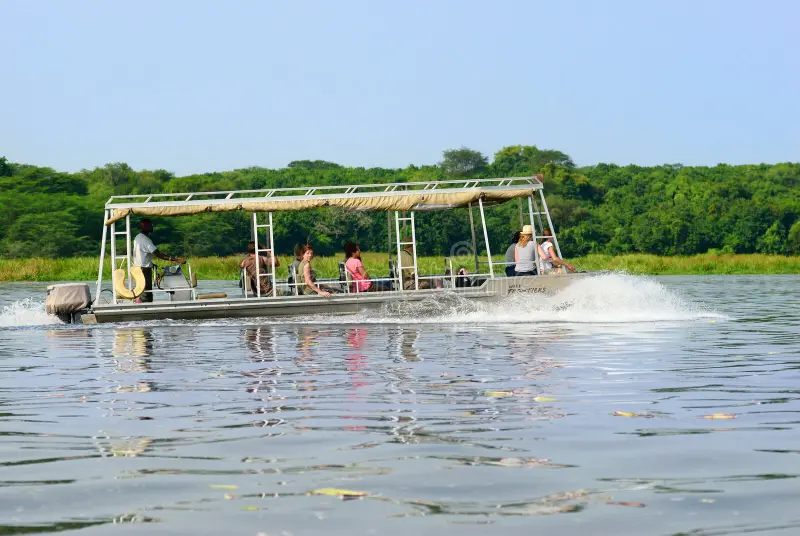
Lake Albert Delta
Lake Albert is one of the African Great Lakes, sitting on the border between Uganda and the Democratic Republic of Congo. It is about 160 kilometers long and 30 kilometers wide, with a surface elevation of 619 meters above sea level.
Uganda holds roughly 46 percent of the lake’s surface area and the DRC the remaining 54 percent. The lake was named by explorer Samuel Baker in 1864, the same man who named both Murchison Falls and Lake Albert in honor of the British royal family on the same expedition. The lake’s outlet at its northern tip becomes the Albert Nile, which flows north through Uganda before entering South Sudan, where it eventually becomes the White Nile.
The Murchison Falls-Albert Delta Wetland System is recognized as a Ramsar site, meaning it meets international criteria for ecological significance as a wetland.
The Lake Albert Delta sits at the western end of the park, where the Victoria Nile fans out into a wide, shallow, papyrus-filled wetland before draining into Lake Albert. It is quieter than the rest of the park, slower, and for certain species, far better.
This is where serious birders come specifically. The delta’s papyrus channels and floating islands of vegetation are among the best places in all of Africa to see the shoebill stork, one of the most sought-after birds on any birder’s life list.
Uganda holds an estimated 1,000 shoebill storks in total, and the Albert Delta is one of only two or three genuinely reliable locations in the country to find them. Beyond the shoebills, the delta supports dozens of waterbird species, a healthy population of hippos and Nile crocodiles, and the large mammals that use the wetland edges as a dry-season refuge.
What to See at the Lake Albert Delta
The Shoebill Stork
The shoebill is the reason many visitors book the delta cruise rather than, or in addition to, the upstream falls cruise. This bird stands around 1.2 meters tall, with a grey bill shaped like a Dutch clog and a prehistoric expression.
Shoebills are solitary and slow-moving. They do not flock. Finding one in the delta requires a patient, quiet boat approach through the papyrus channels, with a guide who knows the birds’ regular hunting areas.
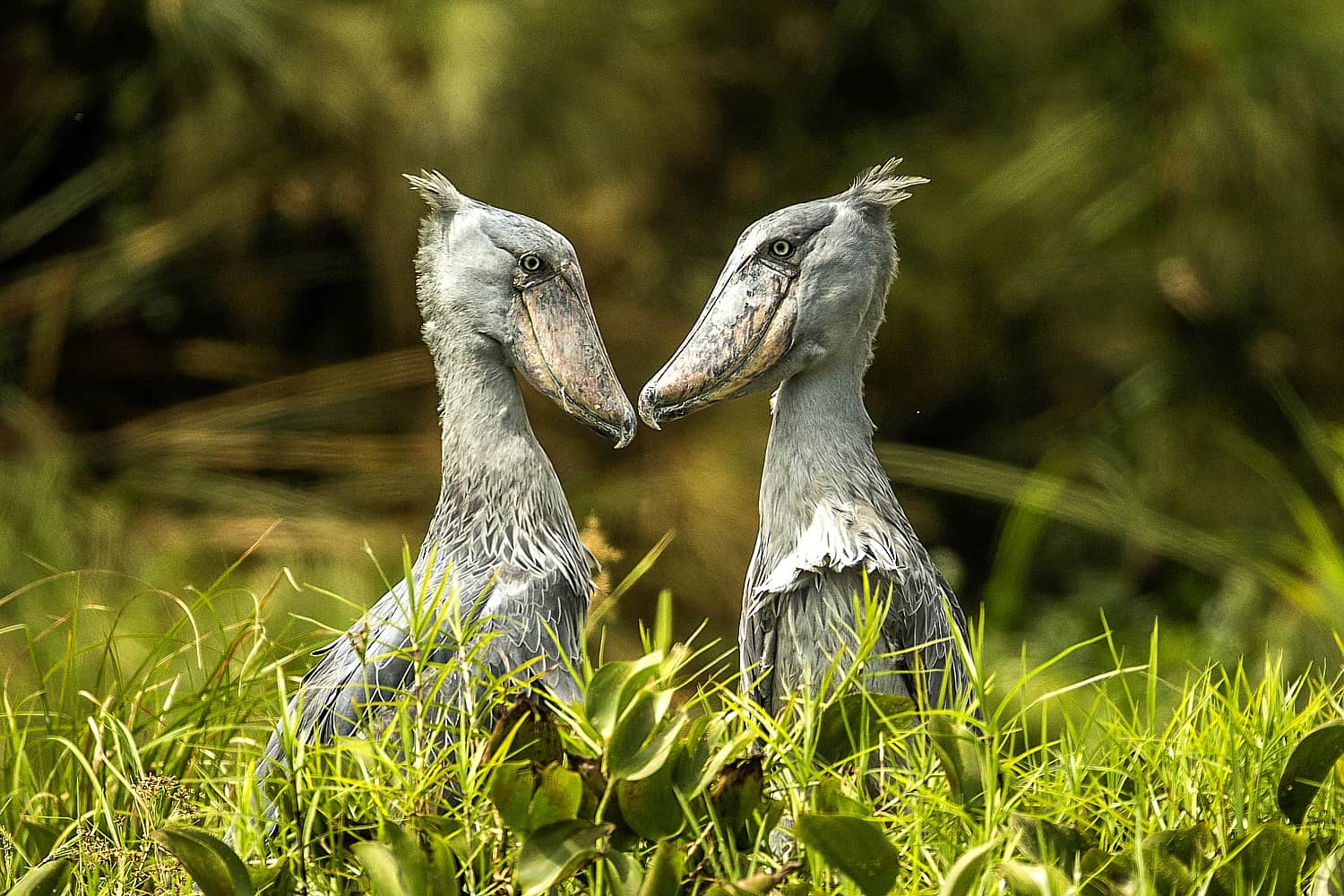
Shoe Bill
During the dry season, when water levels in the delta drop, the shoebills concentrate in specific channels where the fish are more accessible, which makes sightings more predictable. In the wet season, when the water spreads across more ground, the birds disperse and finding them takes longer. Uganda holds one of Africa’s strongest shoebill populations, and the Albert Delta is one of the most reliable sites in the country for a sighting.
Other Waterbirds
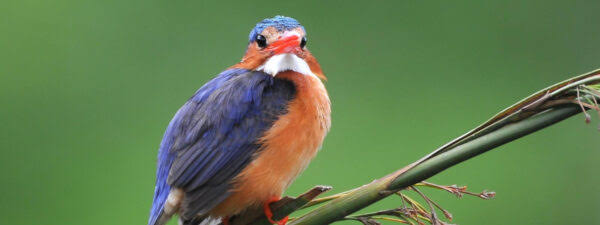
Some of the other bird species spotted include African fish eagles, Goliath herons, saddle-billed storks, great white pelicans, papyrus gonoleks, swamp flycatchers perching, blue-headed coucals, and African jacanas to mention but a few.
Hippos and Nile Crocodiles
The calmer water of the delta and the channels approaching it hold large numbers of hippos. These animals feed on the river banks and in the shallower papyrus areas overnight and spend the day in the water.
Nile crocodiles are present throughout the delta, particularly on the exposed mud banks where the channels widen.
Large Mammals
The edges of the delta attract large mammals, particularly during the dry season when inland water sources dry up. Elephants come to the delta in the morning and late afternoon to drink and feed on the papyrus. Buffaloes graze the grass near the water’s edge. Uganda kobs, waterbucks, and warthogs are common in the open areas between the wetland and the start of the acacia savanna further inland. Because the delta is at the western end of the Buligi area, visitors taking the downstream cruise also pass through sections of the Buligi riverine habitat where giraffe, elephants, and buffalo are regularly seen along the bank.
What to Do at the Lake Albert Delta
Downstream Delta Boat Cruise
The delta boat cruise is the primary way to experience this part of the park, and it runs in the opposite direction from the more famous upstream falls cruise.
Boats depart from the Paraa jetty and head west downstream, following the Victoria Nile as it slows and widens toward Lake Albert. The cruise covers between 20 and 28 kilometers round trip and takes three to five hours depending on the boat speed and how long the guide spends in productive areas.
Morning departures at 7:00 AM give the best conditions for shoebill sightings and bird activity in general. The afternoon departure is popular for the sunset experience over the lake.
The cruise is operated daily by the Uganda Wildlife Authority, with departures at 7:00 AM and 2:00 PM.
Sport Fishing on the Victoria Nile and Lake Albert
The Victoria Nile along the delta approach and the waters of Lake Albert hold Nile perch, tilapia, catfish, and several other species, making it one of the most productive fishing spots in the park because the sheltered channels and shallow water concentrate fish, particularly during the dry season when water levels drop.
Fishing tours are arranged through UWA rangers and lodge operators, with equipment available for hire. All fishing within the park requires a permit.
Park Fees for Lake Albert Delta / Murchison Falls National Park
The Lake Albert Delta sits within Murchison Falls National Park. All visitors pay standard park entry fees in addition to any activity fees. Fees are set by the Uganda Wildlife Authority and are valid from July 2024 through June 2026. Entry fees are charged per person per day and cover 24 hours of park access from the time of entry. Activity fees are charged separately. Payments are accepted by credit card, mobile money (MTN or Airtel), or cash at the gate. If you are traveling with a registered tour operator, park fees are typically included in your package. Always confirm current rates before travel, as the UWA revises tariffs periodically.
|
Fee Category |
Foreign Non-Residents (USD) |
Foreign Residents (USD) |
EAC Citizens (UGX) |
|
Park Entry — Adult (per day) |
45 |
35 |
25,000 |
|
Park Entry—Child 5–15 yrs |
25 |
20 |
10,000 |
|
Park Entry — Child under 5 |
Free |
Free |
Free |
|
Delta Boat Cruise (per person) |
30–40 |
30–40 |
30,000–40,000 |
|
Upstream Falls Cruise (per person) |
30 |
30 |
30,000 |
|
Private Boat Charter (per boat) |
200–350 |
200–350 |
Varies |
|
Sport Fishing (per rod/day) |
50 |
50 |
100,000 |
|
Game Drive (guided, per vehicle) |
30–50 |
30–50 |
50,000–80,000 |
|
Hot Air Balloon Safari |
160–190 |
160–190 |
160–190 USD |
|
Nature Walk (guided, per person) |
15 |
15 |
20,000 |
|
Vehicle Entry — Safari 4WD |
150 |
30 |
30,000 |
|
UWA Campsite (per person/night) |
40 |
40 |
40,000 |
Best Time to Visit the Lake Albert Delta
Dry Season: December to February and June to September
The dry season is the best time to visit the Lake Albert Delta for most activities, and it is by far the most reliable time for shoebill sightings. As the Nile’s water level drops through the dry months, the papyrus channels in the delta narrow and the shoebills concentrate in the remaining productive fishing areas.
This makes the birds much easier to locate and approach by boat. The dry season also brings large numbers of mammals to the delta margins to drink, which means the boat cruise in dry conditions produces more large mammal sightings along the bank than at any other time of year.
Wet Season: March to May and October to November
The wet season raises water levels in the delta, which makes the shoebills spread widely across the wetland and makes finding them difficult.
The delta boat cruise runs throughout the year and is available regardless of season. Shoebill sightings are possible in all months, though success rates are higher in the dry season.
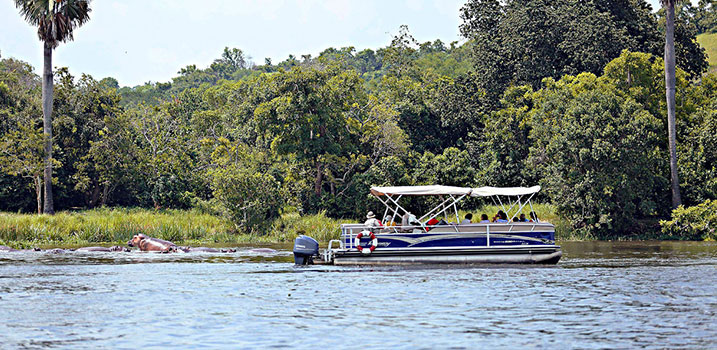
Boat Cruise Lake Albert Delta
How to Get to the Lake Albert Delta
The Lake Albert Delta is accessed through Murchison Falls National Park, approximately 305 kilometers north of Kampala, a four- to five-hour drive via Masindi. From Kampala, the standard route goes through Luwero and Nakasongola to Masindi, then north through Budongo Forest to Paraa. The Delta boat cruise departs from the Paraa jetty on the south bank of the Nile. Visitors staying on the north bank cross the Paraa ferry to reach the jetty.
Domestic flights from Entebbe to Pakuba Airstrip inside the park bring the journey time down to under an hour, landing you directly on the north bank near the Buligi game tracks and within easy reach of the Paraa ferry connection to the delta cruise. This is the fastest option for visitors with limited time who want to combine a game drive on the Buligi tracks with a delta cruise on the same day.
The delta itself lies at the western end of the park, approximately 20 to 28 kilometers downstream from Paraa by boat. There is no road that reaches the core of the delta, which is why the boat cruise is the only practical way to see it. The Paraa jetty is the starting point for all delta and falls cruises.