Kaniyo Pabidi Forest
July 2, 2026
Lake Albert Delta
July 2, 2026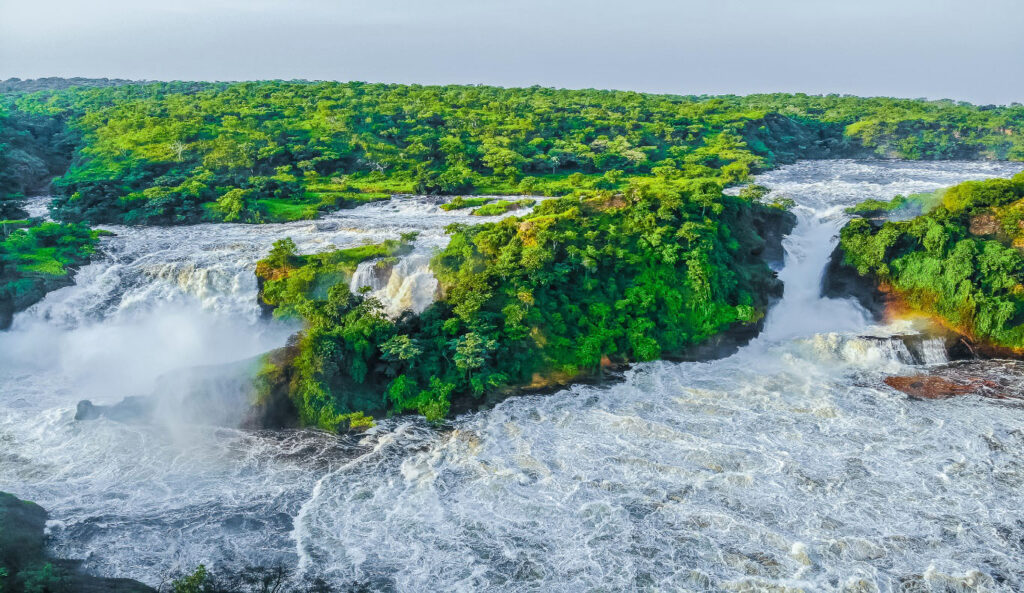
Karuma Falls | Murchison Falls National Park
Karuma Falls sits at an elevation of about 1,000 meters above sea level, on the boundary of Kiryandongo and Oyam Districts, and it marks the eastern limit of Murchison Falls National Park.
The Karuma Wildlife Reserve, gazette in 1964 as a buffer zone for the park, surrounds the area and adds further protection to the wildlife and riverine habitat here. For anyone traveling to Murchison Falls from Kampala, Karuma is both the final stretch of road before the park and a worthwhile destination in its own right.
The name Karuma comes from the Luo word meaning “great spirit.” According to local belief among the Acholi and Langi communities, a powerful spirit placed the stones in the bed of the Nile at this point, splitting and breaking the current to form the falls.
Long before the road came, before the bridge was built, Karuma was a landmark for traders and herders moving between Lango and Acholi territories.
It was a crossing point, a boundary, and a place with spiritual weight. Communities on both banks regarded the river here as a threshold between the human world and something older.
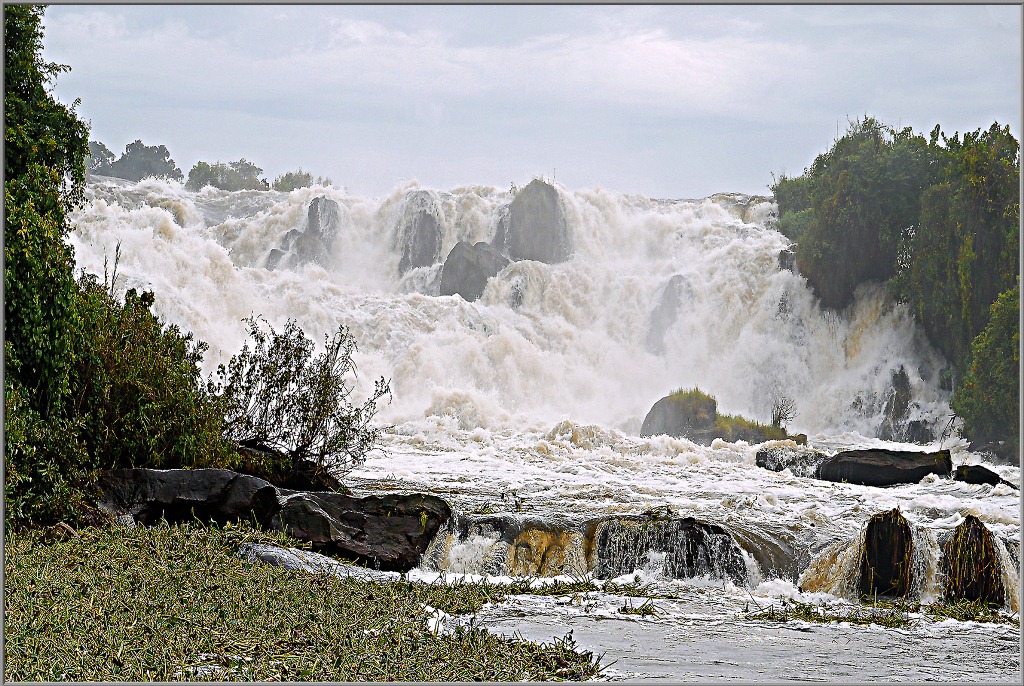
Karuma Falls
In 1862, the explorer John Speke passed near Karuma Falls while searching for the source of the Nile, making it one of the earliest recorded European references to this stretch of the river.
The Karuma Bridge was built in 1963, primarily to help cotton farmers in the West Nile region move their goods across the river to markets further south. For many years after that, crossing the bridge was a routine part of travel between central and northern Uganda.
That changed in the early 2000s when the Lord’s Resistance Army used the Karuma Bridge area as an ambush point, attacking vehicles crossing from both directions.
The bridge became one of the most feared stretches of road in Uganda during those years. The Uganda People’s Defence Force pushed the LRA out of the country and into the forests of the Democratic Republic of Congo in 2007, and the area has been safe for travel ever since. Today, there is no security threat at Karuma, and the bridge sees heavy traffic daily from buses, trucks, and tourist vehicles heading north.
What to See at Karuma Falls
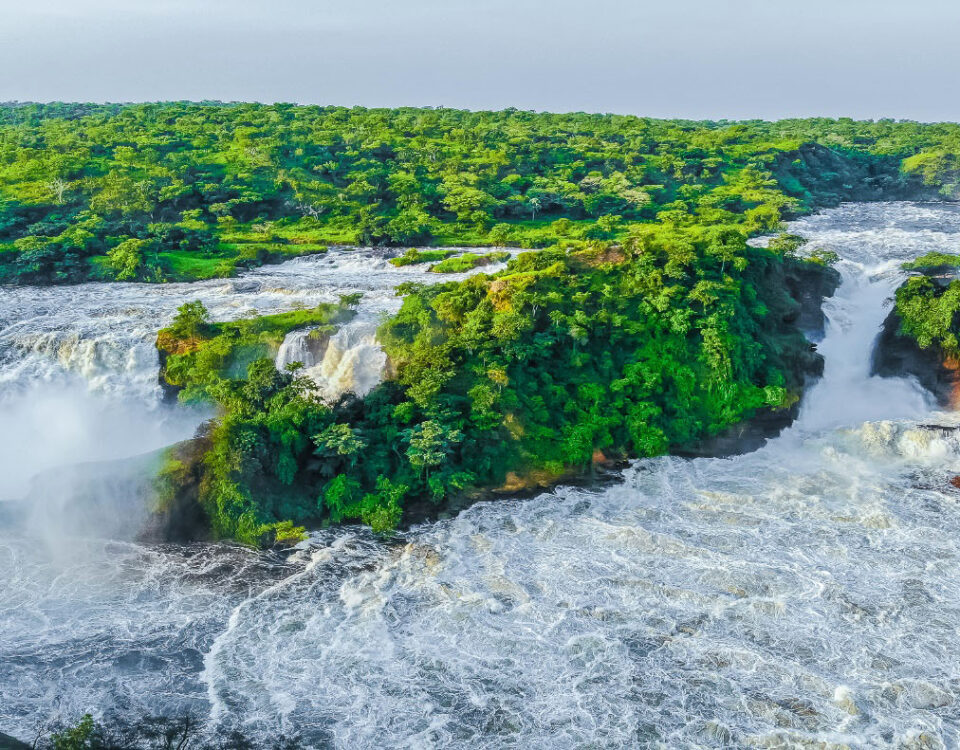
The falls themselves are the first thing to see. From the Karuma Bridge, you look down onto the Victoria Nile churning through its granite bed, the water broken into white foam across a wide stretch of river. The rock formations at the base are remarkable, layered and carved by centuries of water pressure into shapes that look almost deliberate.
In the rainy season between April and May, and again from September to November, the river runs higher and the rapids become even more forceful. The dry season brings lower water levels and exposes more of the rock structure, which makes for interesting viewing of its own.
Along the road margins approaching the bridge, baboons and vervet monkeys are almost always visible. They have grown used to vehicles slowing down on the bridge and will often sit on the roadside watching passing traffic with complete indifference.
Black and white colobus monkeys move through the riverine trees along the banks. Bus drivers occasionally slow down at the bridge specifically so passengers can watch the wildlife and the falls together, which gives you a sense of how central this stop is to the northern Uganda road journey.
The Karuma Wildlife Reserve surrounding the falls holds a good range of savannah and riverine species. Elephants move through the corridor between Murchison Falls National Park and the reserve, particularly during dry spells when they track the river for water.
Uganda Kobs, Jackson’s hartebeests, oribis, waterbucks, warthogs, and buffaloes are all present. Occasionally lions and leopards are spotted in the reserve, though sightings are less reliable here than inside the main park. Hippos live in the quieter pools along the river banks below the falls.
Activities at Karuma Falls
Sport fishing is the main organized activity at Karuma Falls. The fast-moving water and rocky riverbed create ideal conditions for Nile perch and tilapia.
Anglers who know this section of the river rate it highly, and guided fishing trips can be arranged through tour operators serving the Murchison Falls area. The best fishing is in the early morning and late afternoon when the light is low and the fish are more active near the surface.
Nature walks in the Karuma Wildlife Reserve give visitors a chance to explore the riverside habitat on foot with a guide. The walks cover the grassland and riverine edges around the falls, and with a knowledgeable guide pointing out tracks, birds, and plant species, an hour here reveals much more than what you see from the road.
The wildlife density in the reserve is good enough to make this a worthwhile option for travelers with a bit of extra time before heading into the main park.
Combining a Karuma Falls stop with a full Murchison Falls National Park safari is the most popular approach. Visitors driving from Kampala pass Karuma on the way to the park’s eastern entry gates, and a brief stop adds context and some wildlife viewing to the journey without adding significant time. The Chobe Gate and Wankwar Gate, which are the nearest park entry points to Karuma Falls, are just a short drive from the bridge.
Best Time to Visit Karuma Falls
Karuma Falls is accessible all year round, and unlike some of the more remote spots in the Murchison Falls area, the main road to it remains in good condition in most weather.
The dry seasons, December through February and June through August, make the surrounding roads and tracks easiest to navigate, and the lower river levels in the dry months expose more of the granite rock structure in the riverbed.
If you want to see the full drama of the falls when the river is high and the rapids are at their most powerful, visit during or just after the wet seasons in April to May or October to November.
For wildlife viewing in the Karuma Wildlife Reserve, the dry season is generally better. Animals concentrate around water sources and are easier to spot when the vegetation is lower. For birdwatching, the months between November and April bring migrant species from outside Uganda that add to the resident bird list.
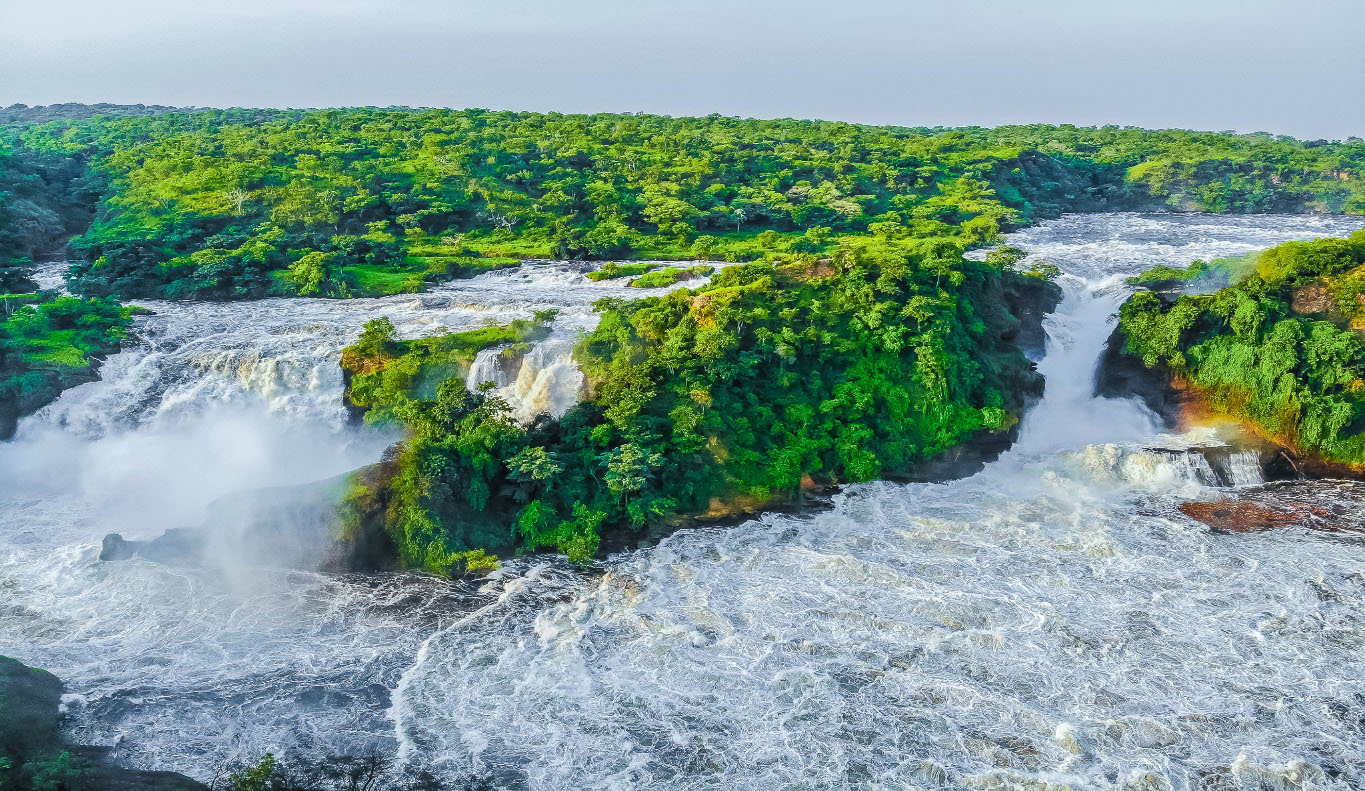
Karuma Falls
How to Get to Karuma Falls
Karuma Falls are located on the Kampala to Gulu highway, approximately 255 kilometers north of Kampala. The drive takes between four and five hours from the capital depending on traffic.
From Masindi town, the falls are about 97 kilometers northeast, roughly a ninety-minute drive. From Gulu, coming from the north, Karuma is 77 kilometers south of the city, around an hour’s drive on the highway.
The falls are immediately south of where the Kampala to Gulu highway crosses the Victoria Nile at Karuma Bridge. You cannot miss them if you are on this road.
Public buses traveling between Kampala and Gulu pass directly over the bridge, making Karuma accessible even without a private vehicle. For visitors combining the falls with a Murchison Falls National Park safari, most tour operators route their vehicle transfers through Karuma and include a brief stop. The nearest park entry points from Karuma are the Chobe Gate and Wankwar Gate, both accessible from the highway.